
2026-10-02 · Dale Harper
Insulating a Metal Workshop in Jenks: What to Know Before You Start
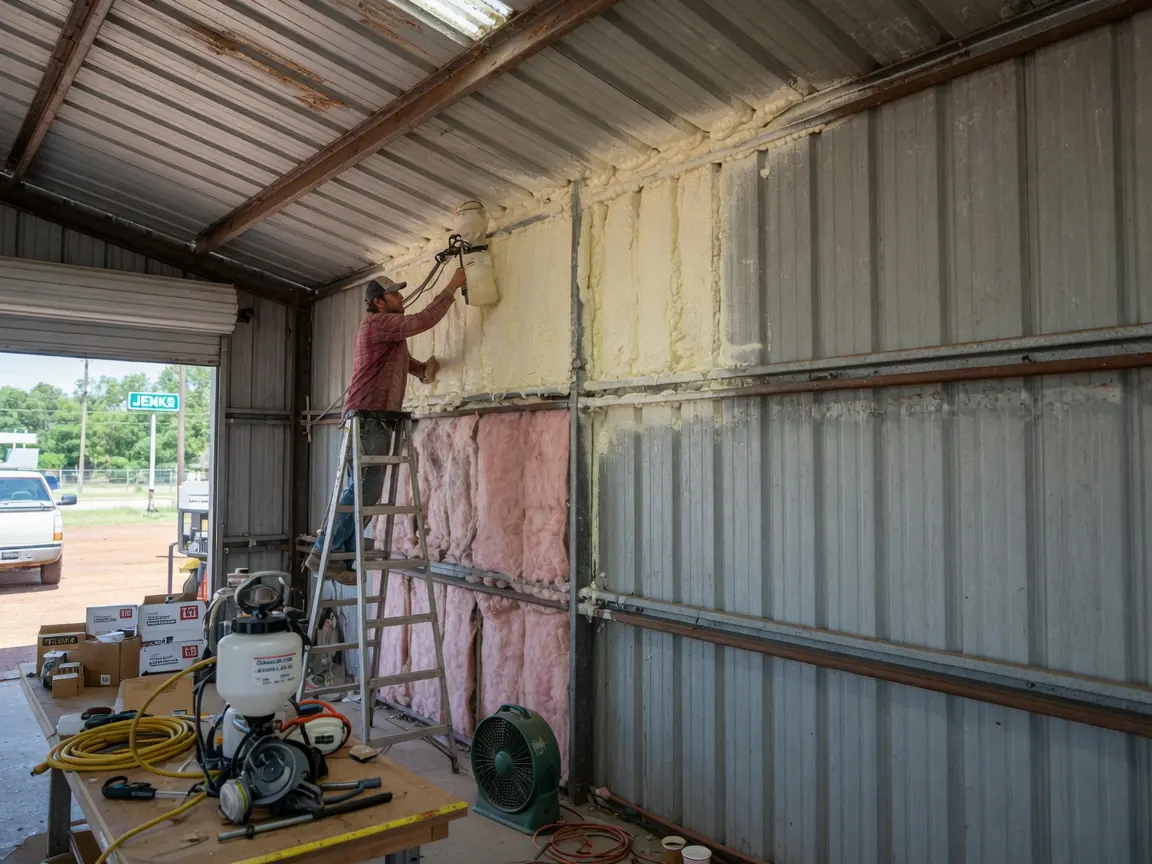
Metal workshops in Jenks require checking for existing rust, ventilation gaps, and roof slope before spray foam application because the area's humid subtropical climate with hot summers and mild winters drives condensation inside uninsulated metal. Owners in South Jenks and near the Jenks Riverwalk often see rapid temperature swings that pull moisture through seams, so addressing those points first avoids trapped vapor later.
Climate Effects on Metal Workshops in Jenks
Jenks sits in Tulsa County where summers push high humidity levels that condense on cool metal surfaces overnight. Mild winters still allow enough temperature drop to create dew points inside workshops, especially those near the Oklahoma Aquarium with more open exposure. Spray foam must seal every joint fully because even small gaps let humid air reach the metal and start corrosion cycles that shorten building life. Local workshops built in the last 30 years often use thinner gauge steel that flexes more, requiring foam thickness that stays flexible without cracking at seams. Downtown Jenks buildings close to the river also deal with occasional higher ground moisture that rises through slab edges, so perimeter sealing becomes essential before any foam goes on walls or ceilings.
Surface Preparation Steps for Jenks Workshops
Start by pressure washing the interior metal to remove dust, oil, and prior coatings that block adhesion. Inspect every seam and fastener for rust, treating spots with a rust converter before foam contact. Remove or seal existing vents that would otherwise create cold spots where moisture collects after insulation. Measure wall height and roof pitch to calculate how much material is needed, noting that pole-style workshops common around Broken Arrow borders often have more exposed framing than fully enclosed buildings. Clear the floor of equipment so crews can reach lower wall sections without obstruction during the job.
Choosing Foam Type and Thickness
Closed-cell spray foam works best for most Jenks metal workshops because it adds structural rigidity to thinner panels while blocking vapor drive from the humid air. Aim for 2 inches on walls and 3 inches on the underside of the roof deck to reach an R-value that handles summer heat loads without excessive material cost. Open-cell foam may suit only dry, well-ventilated shops where sound control matters more than moisture blocking. Always confirm the metal temperature stays above 50 degrees during application, which limits winter scheduling even with mild Jenks winters.
Post-Application Checks and Maintenance
After the foam cures, verify every edge remains fully covered and no voids exist at purlins or girts. Install or adjust ridge vents if the shop needs airflow once insulated to prevent any residual moisture buildup. Schedule follow-up visits in the first year to inspect for any delamination caused by thermal movement. For guidance on vetting installers, review questions to ask before hiring a spray foam insulation contractor in Jenks. Learn more about the process at metal building spray foam insulation.